
Astrogeomanity Museum & Academy

🐸 7. Life Transition to Land – From the Oceans to Land and the Evolution of Animals

1
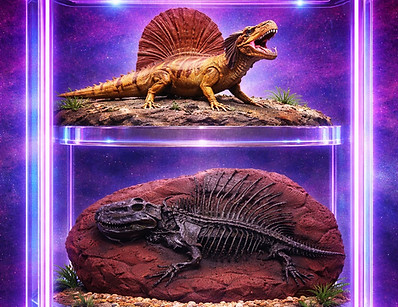
🦎🦴 Inostrasbia – an ancient predator 🧬🌍
📊 Scientific data
Scientific name: 🧬
Inostrasbia
Period: ⏳
~ About 252–260 million years ago
Location: 📍
North and South America 🌍
Type: 🧾
Mammal-like reptiles 🐅
🧾 Description
Saber teeth: Its most prominent feature is a pair of giant tusks (saber teeth) that could reach a length of 15 cm and were used for tearing flesh and hunting armored prey.
Size: It reached a length of about 3 to 3.5 meters and weighed about 1,000 kg (similar in size to a grizzly bear or large tiger).
Body structure: It had a large head (about 60 cm long) and limbs that were located directly under the body (and not to the sides like in primitive reptiles), which allowed it to move quickly and efficiently.
🌍 Where is it located?
The fossils were found in Russia 🌍.
2
🦎🦴 Dimetrodon – an ancient predator with a dorsal sail 🧬🌍
📊 Scientific data
Scientific name: 🧬
Dimetrodon
Period: ⏳
~295–272 million years ago (Permian)
Location: 📍
North America and Europe 🌍
Type: 🧾
Ancient synapsid (close to mammals) 🦎
🧾 Description
Dimetrodon was a large predator 🦎 with a large dorsal sail 🧩.
The sail was used for heat regulation ⚠️.
His teeth are sharp and varied 🧬.
It was not a dinosaur but an early relative of mammals 🌍.
🌍 Where is it located?
Warm continental regions 🌍.
3
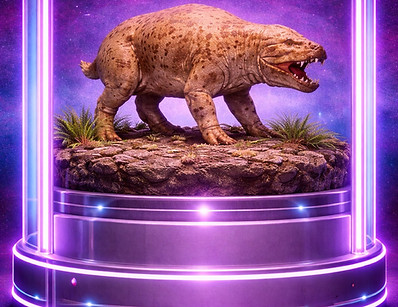
🐗🦴 Kanmairiya – “Hell Pig” 🧬🌍
📊 Scientific data
Scientific name: 🧬
Kannemeyeria
Period: ⏳
~265–245 million years ago (late Permian–early Triassic)
Location: 📍
Africa 🌍 and sometimes similar findings in other areas of the supercontinent Pangaea
Type: 🧾
Ancient plant-eating reptile 🦎🌿
🧾 Description
The Kanamiriya had a heavy and strong body 🦴
With a wide head and a front horned beak 🧩
It belonged to the dicynodont group,
Ancient reptiles that specialized in eating vegetation 🌿
Its jaws were adapted for cutting and crushing tough plants ⚠️
Considered one of the most prominent herbivores
Who lived after the great extinction of the end of the Permian 🌍
🌍 Where is it located?
Open land areas, plains and environments with low vegetation 🌿

4
🦖🦴 Dinosaur claw – fossil of an ancient predator 🧬🌍
📊 Scientific data
Scientific name: 🧬
Theropoda (group)
Period: ⏳
~230–66 million years ago (Triassic–Cretaceous)
Location: 📍
Different continents 🌍
Type: 🧾
Predatory dinosaur 🦖
🧾 Description
This is a fossilized claw 🦴 of a carnivorous dinosaur 🦖.
Curved and sharp ⚠️, adapted for capturing prey 🧩.
May belong to dinosaurs like Velociraptor 🧬.
It was used for hunting and defense 🌍.
🌍 Where is it located?
Fossils around the world 🌍.

5
🥚🦖 Velociraptor Eggs – Dinosaur Reproduction 🧬🌍
📊 Scientific data
Scientific name: 🧬
Velociraptor
Period: ⏳
~75–71 million years ago (Late Cretaceous)
Location: 📍
Asia (Mongolia) 🌍
Type: 🧾
Predatory dinosaur 🦖
🧾 Description
Velociraptor eggs are elongated 🥚 fossils 🧩.
They were placed in neat nests ⚠️.
Indicate developed reproductive behavior 🧬.
Related to bird-like dinosaurs 🌍.
🌍 Where is it located?
Fossils in the deserts of Asia 🌍.

6
🐸🟢 Red-eyed frog – tropical amphibian 🧬🌍
📊 Scientific data
Scientific name: 🧬
Agalychnis callidryas
Period: ⏳
~10–20 million years ago – today
Location: 📍
Central America 🌍
Type: 🧾
Amphibian 🐸
🧾 Description
The red-eyed frog is an amphibian 🐸 from the Ilanitidae family, known for its striking and contrasting colors 🎨.
Its body is bright green with exceptionally large red eyes, which serve as a deterrent to predators ⚠️.
Blue and yellow stripes appear on the sides of the body, and the feet are orange with well-developed adhesion pads 🧩, which allow for efficient climbing on vegetation.
It is adapted to life on trees 🌿, with the ability to adhere to smooth surfaces thanks to microscopic structures on the pads of its fingers.
Active mainly at night 🌙, and feeds on insects and small arthropods 🧬.
The respiratory system combines lungs and cutaneous respiration, and therefore depends on a humid environment.
Breeding occurs near water 💧; the female lays eggs on leaves above water bodies, and the tadpoles fall into the water after hatching.
🌍 Where is it located?
Tropical rainforests in Central America 🌍

7
🐸🟢 Green frog – freshwater amphibian 🧬🌍
📊 Scientific data
Scientific name: 🧬
Pelophylax ridibundus
Period: ⏳
~20 million years – today
Location: 📍
Europe, Asia and other regions 🌍
Type: 🧾
Amphibian 🐸
🧾 Description
The green frog 🐸🟢 is an amphibian with smooth, moist skin with dark spots 🎨.
It has strong hind legs adapted for jumping and swimming 🧩.
Lives near freshwater such as lakes, rivers and swamps 🌊.
Feeds on insects and invertebrates 🧬.
Capable of making loud noises during the breeding season 🌍.
🌍 Where is it located?
Common in Europe, Western Asia and humid regions 🌊🌍

8
🐸🔵 Blue frog – tropical amphibian 🧬🌍
📊 Scientific data
Scientific name: 🧬
Dendrobates tinctorius ("azureus")
Period: ⏳
~10–20 million years ago – today
Location: 📍
South America 🌍
Type: 🧾
Amphibian 🐸
🧾 Description
The blue frog is a small amphibian 🐸 from the Dendrobium family, characterized by a bright blue color with dark spots 🎨, which serve as an aposematic warning signal to predators ⚠️.
Its skin secretes toxic alkaloids 🧬, which are an effective chemical defense mechanism against predators. The toxins are indirectly derived from its diet, which includes ants and other small arthropods.
Compact body structure 🧩, with strong hind limbs adapted for jumping, and grip pads on the fingertips that allow climbing on damp surfaces and vegetation.
It is active during the day (diurnal) 🌞 and lives in humid environments of tropical rainforests 🌿, where it maintains skin moisture essential for skin respiration.
Breeding takes place in a humid environment 💧, with the female laying eggs in protected areas, and the male sometimes guarding them and even leading the tadpoles to small water sources.
🌍 Where is it located?
Tropical rainforests in South America 🌍

9
🐸🟢 Green tree frog – climbing amphibian 🧬🌍
📊 Scientific data
Scientific name: 🧬
Hyla sp.
Period: ⏳
~30 million years – today
Location: 📍
America, Europe and tropical regions 🌍
Type: 🧾
Amphibian 🐸
🧾 Description
A green tree frog is an amphibian 🐸 from the family of tree frogs, adapted to life on trees and vegetation 🌿.
Its skin is smooth and moist 🎨, often green in color, which helps camouflage it in the plant environment.
Its fingertips have special grip pads 🧩 that allow it to climb smooth, vertical surfaces.
It performs combined respiration through the lungs and skin 🧬, and therefore depends on high environmental humidity.
Active mainly at night 🌙, and feeds on insects and small arthropods.
Reproduction occurs in water 💧, where the tadpoles develop to the adult stage.
🌍 Where is it located?
Forests, tropics and humid environments 🌍

10
🐸🟤 Horned Frog – Predatory Amphibian 🧬🌍
📊 Scientific data
Scientific name: 🧬
Ceratophrys sp.
Period: ⏳
~20–30 million years ago – today
Location: 📍
South America 🌍
Type: 🧾
Amphibian 🐸
🧾 Description
The green horned frog is an amphibian 🐸 from the family Carthopteridae, characterized by a relatively wide and flat body 🧩 and an especially large head in relation to the rest of the body.
Above its eyes are "horn-like" skin protrusions 🎨, which give it its name and help it camouflage itself among leaves and the forest floor.
Its green colors with dark spots allow it to blend into its habitat 🌿 and hide from predators and prey.
It is an ambush predator ⚠️ with very strong jaws, capable of capturing prey that is relatively large for its size, including insects, small reptiles, and even other amphibians 🧬.
Its behavior includes sitting in one place for a long time and waiting for prey, using effective camouflage.
Active mainly at night 🌙 and dependent on high humidity for skin respiration and proper functioning.
Reproduction takes place in temporary bodies of water 💧, where the tadpoles develop until metamorphosis is complete.
🌍 Where is it located?
Tropical forests and humid areas in South America 🌍

11
🐸🟢 Red-eyed frog – tropical amphibian 🧬🌍
📊 Scientific data
Scientific name: 🧬
Agalychnis callidryas
Period: ⏳
~10–20 million years ago – today
Location: 📍
Central America 🌍
Type: 🧾
Amphibian 🐸
🧾 Description
The red-eyed frog is an amphibian 🐸 from the Ilanitidae family, known for its striking and contrasting colors 🎨.
Its body is bright green with exceptionally large red eyes, which serve as a deterrent to predators ⚠️.
Blue and yellow stripes appear on the sides of the body, and the feet are orange with well-developed adhesion pads 🧩, which allow for efficient climbing on vegetation.
It is adapted to life on trees 🌿, with the ability to adhere to smooth surfaces thanks to microscopic structures on the pads of its fingers.
Active mainly at night 🌙, and feeds on insects and small arthropods 🧬.
The respiratory system combines lungs and cutaneous respiration, and therefore depends on a humid environment.
Breeding occurs near water 💧; the female lays eggs on leaves above water bodies, and the tadpoles fall into the water after hatching.
🌍 Where is it located?
Tropical rainforests in Central America 🌍

12
🐸🟢 Green Horned Frog – Carnivorous Amphibian 🧬🌍
📊 Scientific data
Scientific name: 🧬
Ceratophrys sp.
Period: ⏳
~20–30 million years ago – today
Location: 📍
South America 🌍
Type: 🧾
Amphibian 🐸
🧾 Description
The green horned frog is an amphibian 🐸 from the family Carthopteridae, characterized by a relatively wide and flat body 🧩 and an especially large head in relation to the rest of the body.
Above its eyes are "horn-like" skin protrusions 🎨, which give it its name and help it camouflage itself among leaves and the forest floor.
Its green colors with dark spots allow it to blend into its habitat 🌿 and hide from predators and prey.
It is an ambush predator ⚠️ with very strong jaws, capable of capturing prey that is relatively large for its size, including insects, small reptiles, and even other amphibians 🧬.
Its behavior includes sitting in one place for a long time and waiting for prey, using effective camouflage.
Active mainly at night 🌙 and dependent on high humidity for skin respiration and proper functioning.
Reproduction takes place in temporary bodies of water 💧, where the tadpoles develop until metamorphosis is complete.
🌍 Where is it located?
Tropical forests and humid areas in South America 🌍
13
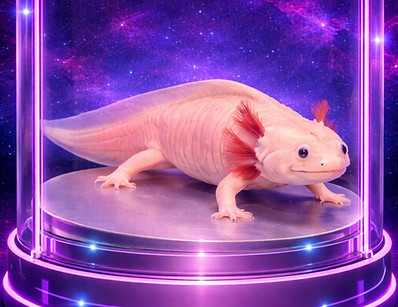
🦎🌸 Axolotl – Neotenic Amphibian 🧬🌍
📊 Scientific data
Scientific name: 🧬
Ambystoma mexicanum
Period: ⏳
~10–15 million years ago – today
Location: 📍
Mexico 🌍
Type: 🧾
Amphibian 🐸
🧾 Description
The axolotl is an amphibian 🐸 from the amblystomatidae family, known for its ability to maintain larval stage characteristics even in adulthood (neutonia) 🧬.
Unlike most amphibians, it does not undergo complete metamorphosis and remains alive in water throughout its entire life 💧.
Its prominent feature is branched external gills 🎨, which allow breathing in water, in addition to breathing through the skin and lungs.
Its body is elongated and soft 🧩, with short limbs and a flat tail adapted for swimming.
The axolotl is famous for its extraordinary ability to regenerate organs ⚠️, including limbs, parts of the heart, spinal cord, and even brain tissue.
It is a small predator that feeds on worms, insects, and small aquatic creatures.
It is active mainly at night 🌙 and lives in calm freshwater.
🌍 Where is it located?
Freshwater lakes and canals in Mexico 🌍

14
🦎⚫🟡 Fire Salamander – Poisonous Amphibian 🧬🌍
📊 Scientific data
Scientific name: 🧬
Salamandra salamandra
Period: ⏳
~20–30 million years ago – today
Location: 📍
Europe and North Africa 🌍
Type: 🧾
Amphibian 🐸
🧾 Description
The fire salamander is an amphibian 🐸 from the salamander family, known for its striking warning colors of black with yellow spots 🎨.
These colors constitute an aposematic signal ⚠️ that alerts predators to its toxicity.
Its skin contains poison glands 🧬 that secrete toxic substances as protection against enemies.
Its body is elongated 🧩 with a well-developed tail and short but strong legs, adapted for walking on damp ground.
It is active mainly at night 🌙 and lives in humid forests, where it hides under stones, trunks, and leaves.
It feeds on invertebrates such as insects, worms, and snails.
Reproduction is associated with an aquatic environment 💧, with the larvae developing in water before transitioning to terrestrial life.
🌍 Where is it located?
Moist forests, mountainous areas and shady areas in Europe 🌍

15
🦎🟤 Giant Salamander – Ancient Amphibian 🧬🌍
📊 Scientific data
Scientific name: 🧬
Cryptobranchus sp.
Period: ⏳
~160 million years ago – today
Location: 📍
North America and Asia 🌍
Type: 🧾
Amphibian 🐸
🧾 Description
The giant salamander is an amphibian 🐸 from the Cryptobranchidae family, which is considered one of the oldest groups of amphibians alive today 🧬.
Its body is elongated and wide 🧩, with wrinkled skin rich in folds, which increase the surface area and allow for efficient gas exchange through the skin (cutaneous respiration).
It lives mainly in flowing water 💧, such as cold rivers and streams, where it spends most of its life.
Its eyes are relatively small and its vision is limited, and it relies mainly on sensing vibrations in the water to locate prey.
It is a predator 🧬 that feeds on fish, crustaceans, and various invertebrates.
Its activity is mainly nocturnal 🌙, and it tends to hide under stones and in burrows during the day.
These salamanders have a relatively low metabolic rate, which allows them to survive in low oxygen conditions.
Reproduction occurs in water 💧, with the male guarding the eggs until they hatch.
🌍 Where is it located?
Cold rivers and streams in North America and Asia 🌍

16
🦎🟢 Spotted Salamander – terrestrial amphibian 🧬🌍
📊 Scientific data
Scientific name: 🧬
Ambystoma maculatum
Period: ⏳
~20–30 million years ago – today
Location: 📍
North America 🌍
Type: 🧾
Amphibian 🐸
🧾 Description
The spotted salamander is an amphibian 🐸 from the Ambystomatidae family, characterized by an elongated body and a prominent spot pattern 🎨 along the back and sides.
Its colors, which include green, yellow, and black, serve as camouflage in the humid environment of the forest floor 🌿 and as a possible warning signal to predators ⚠️.
Its skin is moist and relatively smooth, and contains glands that secrete substances for protection 🧬.
Its body is built for slow but steady movement 🧩, with short limbs and a developed tail that helps with balance.
It is active mainly at night 🌙 and spends most of its time hiding under stones, leaves, and tree trunks.
It feeds on insects, worms, and other invertebrates 🧬.
Reproduction is related to water 💧, with eggs laid in seasonal bodies of water and larvae developing there before transitioning to terrestrial life.
🌍 Where is it located?
Moist forests and shady areas in North America 🌍

17
🦎🟤 Bearded lizard – desert reptile 🧬🌍
📊 Scientific data
Scientific name: 🧬
Pogona vitticeps
Period: ⏳
~40 million years – today
Location: 📍
Australia 🌍
Type: 🧾
Reptile 🦎
🧾 Description
The bearded lizard is a reptile 🦎 from the family of agamidae, known for its spiny "beard" in the throat area 🎨, which swells when threatened and serves as a defensive signal ⚠️.
Its body is relatively wide and flat 🧩, with spiny scales that aid in protection and camouflage in the desert environment 🌿.
Its colors vary between brown, yellow, and orange, depending on temperature and physiological state.
It has the ability to regulate heat (ectothermic) 🧬, and usually basks in the sun to raise its body temperature.
Its diet is diverse and includes insects, plants, and invertebrates, and is therefore considered omnivorous.
Active mainly during the day 🌞, and spends a lot of time on rocks or open ground to warm up.
When in danger, it may open its mouth, inflate its throat, and darken its color as a deterrent.
Reproduction takes place by laying eggs 🥚 in the ground, from which independent offspring hatch.
🌍 Where is it located?
Desert and semi-desert areas in Australia 🌍
%20%E2%80%93%20%D7%96%D7%95%D7%97%D7%9C%20%D7%9E%D7%93%D7%91%D7%A8%D7%99.jpeg)
18
🦎🪶 Flying lizard (collared lizard) – desert reptile 🧬🌍
📊 Scientific data
Scientific name: 🧬
Chlamydosaurus kingii
Period: ⏳
~40 million years – today
Location: 📍
Australia and New Guinea 🌍
Type: 🧾
Reptile 🦎
🧾 Description
The collared lizard is a reptile 🦎 from the family of agamidae, known for a unique skin structure on its neck that creates a wide "collar" 🎨 that opens when threatened.
When in danger, the lizard spreads its collar ⚠️, opens its mouth, and sometimes makes sounds to deter predators.
Its body is elongated 🧩 with strong limbs and a long tail, and it is capable of running on two legs at high speed.
Its colors are grayish-brown, which helps camouflage it in open forests and dry areas 🌿.
It is ectothermic 🧬 and depends on external heating from the sun to regulate body temperature.
It feeds mainly on insects, but also on other invertebrates and sometimes on small vertebrates.
Active during the day 🌞 and tends to climb trees or stay close to the ground.
Reproduction is carried out by laying eggs 🥚 in the soil.
🌍 Where is it located?
Tropical and subtropical regions of Australia and New Guinea 🌍

19
🦎⚪ Gecko – a climbing reptile 🧬🌍
📊 Scientific data
Scientific name: 🧬
Gekkonidae
Period: ⏳
~50 million years – today
Location: 📍
Tropical and subtropical regions around the world 🌍
Type: 🧾
Reptile 🦎
🧾 Description
The gecko is a reptile 🦎 from the gecko family, known for its unique ability to climb smooth and even vertical surfaces 🧩.
At the tips of its fingers are special adhesion pads 🎨 containing microscopic structures (stipules), which create van der Waals forces and enable effective adhesion to surfaces.
Its body is small and flexible, with a long tail that is used for balance and can even detach as a means of defense ⚠️ against predators (autotomy).
Its skin is covered with fine scales, and is sometimes light or translucent in color, especially in certain species.
The gecko is ectothermic 🧬 and depends on the ambient temperature for its physiological activity.
Most species are active at night 🌙 and feed on insects and small invertebrates.
Some species are capable of making sounds to communicate.
Reproduction takes place by laying eggs 🥚, usually in protected places.
🌍 Where is it located?
Hot spots around the world, including homes and urban environments 🌍

20
🦎⚫ Water Power – Predatory Reptile 🧬🌍
📊 Scientific data
Scientific name: 🧬
Varanus salvator
Period: ⏳
~40 million years – today
Location: 📍
Southeast Asia 🌍
Type: 🧾
Reptile 🦎
🧾 Description
The water lizard is a reptile 🦎 from the family of lizards, considered one of the largest lizards in the world 🧬.
Its body is elongated and strong 🧩, with well-developed muscles, a long tail, and strong limbs that allow for efficient movement both on land and in water 💧.
Its skin is covered with thick scales 🎨 that provide protection against injury and water loss.
It is an excellent swimmer, using its tail for swimming and its claws for climbing and digging.
Its tongue is forked ⚠️ and serves to chemically sense the environment, similar to snakes.
The water vole is an opportunistic predator 🧬 that feeds on a wide variety of prey, including fish, birds, small mammals, and even carrion.
Active mainly during the day 🌞, but can also be active at other times depending on environmental conditions.
It is ectothermic and depends on the ambient temperature to regulate its body temperature.
Reproduction takes place by laying eggs 🥚, sometimes in natural nests or soft soil.
🌍 Where is it located?
Rivers, wetlands and tropical areas in Southeast Asia 🌍

21
🦎🟢 Iguana – Tropical Reptile 🧬🌍
📊 Scientific data
Scientific name: 🧬
Iguana iguana
Period: ⏳
~50 million years – today
Location: 📍
Central and South America 🌍
Type: 🧾
Reptile 🦎
🧾 Description
The iguana is a reptile 🦎 from the iguana family, characterized by an elongated body and a very long tail 🧩 used for balance and protection.
Its skin is covered with hard scales 🎨, and sometimes a spiky ridge appears along its back, which helps protect and deter predators ⚠️.
The iguana is ectothermic 🧬, and therefore depends on external heating from the sun to regulate its body temperature, and is sometimes observed sunbathing throughout the day 🌞.
It is adapted to life on trees 🌿, with sharp claws and strong limbs that allow for efficient climbing of branches.
Its tail also serves as an active defense mechanism, and it is capable of whipping it when in danger.
Its diet is mainly vegetarian, including leaves, fruits, and flowers, although young may also consume insects.
It has a well-developed sense of vision, which helps it detect movement and predators in its environment.
Reproduction is carried out by laying eggs 🥚 in the ground, from which independent offspring hatch.
🌍 Where is it located?
Tropical forests and humid areas in Central and South America 🌍

22
🐍🤍 Ball python – predatory reptile 🧬🌍
📊 Scientific data
Scientific name: 🧬
Python regius
Period: ⏳
~50 million years – today
Location: 📍
Africa 🌍
Type: 🧾
Reptile 🐍
🧾 Description
The ball python is a reptile 🐍 of the python family, known for its medium size and characteristic color pattern of brown and light spots 🎨.
Its body is very muscular and flexible 🧩, allowing it to move efficiently both on the ground and in dense cover.
It is a strangling snake ⚠️, which captures its prey by wrapping its body around the victim and applying pressure until blood flow stops.
Its jaws are extremely flexible, allowing it to swallow prey whole that is larger than the diameter of its head 🧬.
It is active mainly at night 🌙 and feeds on small mammals, birds and sometimes other reptiles.
When it feels threatened, it tends to curl up into a ball, with its head hidden inside its body – a behavior that gave it its name.
It is ectothermic and depends on the ambient temperature to regulate its body temperature.
Reproduction takes place by laying eggs 🥚, with the female guarding them and sometimes even regulating their temperature.
🌍 Where is it located?
Savannahs, open forests and tropical areas in Africa 🌍
23
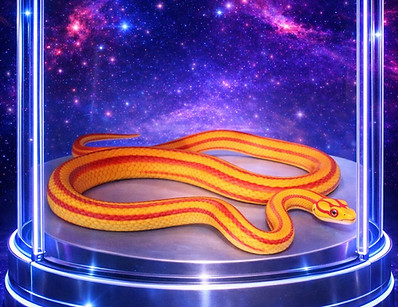
🐍🟡 Corn snake – non-venomous reptile 🧬🌍
📊 Scientific data
Scientific name: 🧬
Pantherophis guttatus
Period: ⏳
~30 million years – today
Location: 📍
North America 🌍
Type: 🧾
Reptile 🐍
🧾 Description
The corn snake is a reptile 🐍 from the family of vipers, known for its striking colors and geometric patterns on its skin 🎨.
Its body is elongated and relatively thin 🧩, which allows it smooth movement and the ability to penetrate narrow places such as burrows and cracks.
This is a non-venomous snake ⚠️, which captures its prey by strangulation, similar to other strangling snakes.
It feeds mainly on small rodents 🐭, and is therefore considered to be of great ecological importance in maintaining population balance.
Its jaws are very flexible 🧬, allowing it to swallow prey whole.
The corn snake is active mainly at night or at dusk 🌙.
It is well adapted to life in diverse environments, including forests, fields, and agricultural areas 🌿.
Reproduction is carried out by laying eggs 🥚, from which independent offspring hatch.
🌍 Where is it located?
Forests, fields and agricultural areas in North America 🌍

24
🐍🟢 Green Tree Python – Climbing Reptile 🧬🌍
📊 Scientific data
Scientific name: 🧬
Morelia viridis
Period: ⏳
~40 million years – today
Location: 📍
New Guinea and Australia 🌍
Type: 🧾
Reptile 🐍
🧾 Description
The green tree python is a reptile 🐍 from the python family, which specializes in living in trees 🌿.
Its body is strong and flexible 🧩 and has a bright green color with white patterns, which help camouflage it among the leaves ⚠️.
It usually stays in a characteristic looped position on branches, with its body wrapped around the branch and its head placed in the center.
This is a strangling snake 🧬, which captures its prey by wrapping its body around it and applying pressure.
Its diet includes small mammals, birds, and other reptiles.
It is mainly active at night 🌙, so it hunts from ambush.
Its eyes are large and allow good vision in low light conditions.
Reproduction takes place by laying eggs 🥚, with the female protecting them until they hatch.
🌍 Where is it located?
Tropical rainforests 🌍
%20%E2%80%93%20%D7%96%D7%95%D7%97%D7%9C%20%D7%98%D7%95%D7%A8%D7%A3%20Ball%20python%20(color%20morph)%20%E2%80%93%20predatory%20reptile.jpeg)
25
🐍🟡 Ball python (color morph) – predatory reptile 🧬🌍
📊 Scientific data
Scientific name: 🧬
Python regius
Period: ⏳
~50 million years – today
Location: 📍
Africa 🌍
Type: 🧾
Reptile 🐍
🧾 Description
This royal python is a color variation (morph) 🧬 of the species Python regius, created through selective breeding.
Its body is very muscular and flexible 🧩, with bright color patterns of yellow, orange, and red 🎨, which differ from the natural pattern of the species.
Like other pythons, it is a strangulating snake ⚠️, capturing its prey by wrapping its body around it and applying pressure until blood circulation stops.
Its jaws are extremely flexible and allow it to swallow prey whole 🧬.
It is active mainly at night 🌙 and feeds on small mammals and birds.
When it feels threatened, it curls into a ball – a typical behavior for this species.
Despite its striking colors, its biological and ecological characteristics are identical to those of the royal python in the wild.
Reproduction takes place by laying eggs 🥚, with the female protecting them until they hatch.
🌍 Where is it located?
In the wild: savannas and open forests in Africa 🌍
Captive: Very common in breeding 🧬

28
🐢🌊 Hawksbill Sea Turtle – Marine Reptile 🧬🌍
📊 Scientific data
Scientific name: 🧬
Eretmochelys imbricata
Period: ⏳
~100 million years – today
Location: 📍
Tropical oceans 🌍
Type: 🧾
Reptile 🐢
🧾 Description
The hawksbill sea turtle is a marine reptile 🐢 from the turtle family, adapted to life in warm oceans 🌊.
Its body is hydrodynamic 🧩, with large front fins that allow for efficient swimming over long distances.
Its armor is made of overlapping plates of rays 🎨, which create a unique pattern of light and dark spots, which serve as camouflage in the coral reef environment ⚠️.
Its mouth ends in a sharp beak-like structure 🧬, which allows it to feed on sponges, invertebrates, and corals.
It has impressive navigational skills, and sometimes returns to the same beach where it was born to lay eggs 🥚.
It is ectothermic and depends on the water temperature to regulate its body temperature.
Sea turtles play an important role in the marine ecosystem, especially in maintaining the balance of coral reefs.
🌍 Where is it located?
Tropical oceans and coral reefs 🌍

29
🐢🌊 Sea turtles – marine reptiles 🧬🌍
📊 Scientific data
Scientific name: 🧬
Chelonioidea
Period: ⏳
~110 million years – today
Location: 📍
Oceans around the world 🌍
Type: 🧾
Reptiles 🐢
🧾 Description
Sea turtles are a group of marine reptiles 🐢 that evolved during the Cretaceous and adapted to life in the oceans 🌊.
Their bodies are hydrodynamic 🧩, with limbs that have evolved into long fins that allow for efficient swimming over great distances.
Their armor is made of bony plates covered with horny plates 🎨, with a variety of patterns and colors used for camouflage in the marine environment ⚠️.
Sea turtles are ectothermic 🧬 and depend on water temperature to regulate their body temperature.
Their diet varies between species: some feed on marine plants, others on sponges, jellyfish, or invertebrates.
They are known for their impressive navigational abilities, and sometimes return to the same beaches where they were born to lay eggs 🥚.
Despite their marine life, reproduction occurs on land, with females laying eggs on sandy beaches.

30
🐢🛡️ Alligator snapping turtle – freshwater reptile 🧬🌍
📊 Scientific data
Scientific name: 🧬
Macrochelys temminckii
Period: ⏳
~20 million years – today
Location: 📍
North America 🌍
Type: 🧾
Reptile 🐢
🧾 Description
The alligator snapping turtle is one of the largest and most impressive freshwater turtles 🐢, known for its ancient, armored appearance 🛡️.
Its armor is rough and has prominent ridges and spines 🎨, which help camouflage it on the river bottom ⚠️.
Its head is very large and has extremely strong jaws, capable of producing a high bite force 🧬.
Its tongue contains a worm-like structure that serves as a unique bait for catching fish – an example of sophisticated hunting behavior.
It lives mainly at the bottom of rivers and lakes, where it waits in ambush for prey.
Its diet includes fish, amphibians, and sometimes other small animals.
It is an ectothermic animal, active mainly in water and relatively slow in movement outside of it.
Reproduction is carried out by laying eggs 🥚 on land.
🌍 Where is it located?
Rivers and lakes in the southern United States 🌍
31
🐢🟤 Land turtle – terrestrial reptile 🧬🌍
📊 Scientific data
Scientific name: 🧬
Testudinidae
Period: ⏳
~50 million years – today
Location: 📍
Different continental regions 🌍
Type: 🧾
Reptile 🐢
🧾 Description
The land tortoise is a reptile 🐢 from the tortoise family, characterized by a high, domed shell 🧩 that provides protection from predators.
Its armor is made of strong bony plates 🎨 covered with horny plates, which create unique circular or spotted patterns ⚠️.
Its body is heavy and relatively slow, with thick legs and columns adapted for walking on dry ground and carrying the weight of the body.
It is ectothermic 🧬 and depends on the ambient heat to regulate its body temperature, so it tends to bask in the sun 🌞.
Its diet is mainly vegetarian, including grasses, leaves, and sometimes fruits.
Land turtles have a very long lifespan, and sometimes they can live for dozens or even hundreds of years.
Reproduction is carried out by laying eggs 🥚 in the ground, from which independent offspring hatch.
🌍 Where is it located?
Savannahs, dry areas and open spaces 🌍
32
🐢🟫 Giant tortoise – large terrestrial reptile 🧬🌍
📊 Scientific data
Scientific name: 🧬
Chelonoidis nigra / Aldabrachelys gigantea
Period: ⏳
~50 million years – today
Location: 📍
Galapagos Islands and Aldabra Islands 🌍
Type: 🧾
Reptile 🐢
🧾 Description
The giant tortoise is one of the largest terrestrial reptiles in the world, known for its impressive size and exceptionally long lifespan.
Its armor is large and dome-shaped 🧩, built of strong bony plates covered with a layer of horn, which provides protection from predators ⚠️.
Its body is very heavy, and its legs are thick and columnar, adapted for carrying a lot of weight and walking slowly on the ground.
It is ectothermic and depends on the ambient heat, so it tends to warm up in the sun throughout the day 🌞.
Its diet is mainly vegetarian, and includes grasses, leaves, fruits, and sometimes cacti.
These turtles have a very slow metabolic rate, which contributes to their longevity – sometimes over 100 years.
Reproduction is carried out by laying eggs 🥚 in the ground, and the offspring are independent from the moment they hatch.
🌍 Where is it located?
Galapagos Islands 🌍
Aldabra Islands 🌍
🔥 Summary of Showcase 7
This is the moment when life takes the big step —
And come out of the water onto the land